




Sustainable marketing is more than green corporate branding. Behind the scenes, marketing worked for decades on one simple idea. Get attention fast. Convert fast. Scale fast. That model is now breaking and that is why brands are turning to sustainable marketing.
Global trust in advertising is low. According to Edelman Trust Barometer 2023, only 33% of people trust ads as a source of information. Trust in brands now depends more on values and behaviour than on creative campaigns.
Consumers also see through false sustainability claims. A European Commission review (2020 and updated in 2023) found that:
53% of green claims were vague or misleading
40% had no proof, this directly led to new EU laws against greenwashing.
Costs for the fast “leads on auto-pilot” model are rising too. Digital ad prices have increased sharply:
Google Ads CPCs rose by over 40% in many B2B sectors between 2019 and 2023
Meta Ads efficiency dropped due to tracking limits and privacy rules
This lack of trust creates a hard business reality in which fast marketing brings fast decay. But trust-based marketing and branding, on the other hand, creates slower but stronger growth. This is where the true pull and attraction for sustainable marketing comes from. It is not a trend. It is a response to:
Trust collapse
Regulation
Platform instability
Rising acquisition costs
Long-term brand risk

The American Marketing Association defines sustainable marketing as: “Marketing that meets the needs of the present without compromising the ability of future generations to meet their own needs.” In simple business language. sustainable marketing means you do not grow by damaging trust, health, society, or the future. You run your marketing in a way that:
Builds long-term customer trust
Does not harm people, society, or the environment
Supports stable business growth over time
| Traditional Marketing | Sustainable Marketing |
|---|---|
| Short campaigns | Long customer life |
| Fast sales | Stable demand |
| Maximum attention | Honest communication |
| Strong persuasion | Lower long-term risk |

Your marketing is not separate from how the business operates. If marketing and operations do not match, trust breaks. Because as you can see from above, trust is now the main buying filter, you will inevitably suffer financially. If sustainability only exists in ads, it is not sustainable marketing. Your corprote sustainability connects to:
How products are made
How people are treated
How data is used
How supply chains work
How waste and emissions are handled
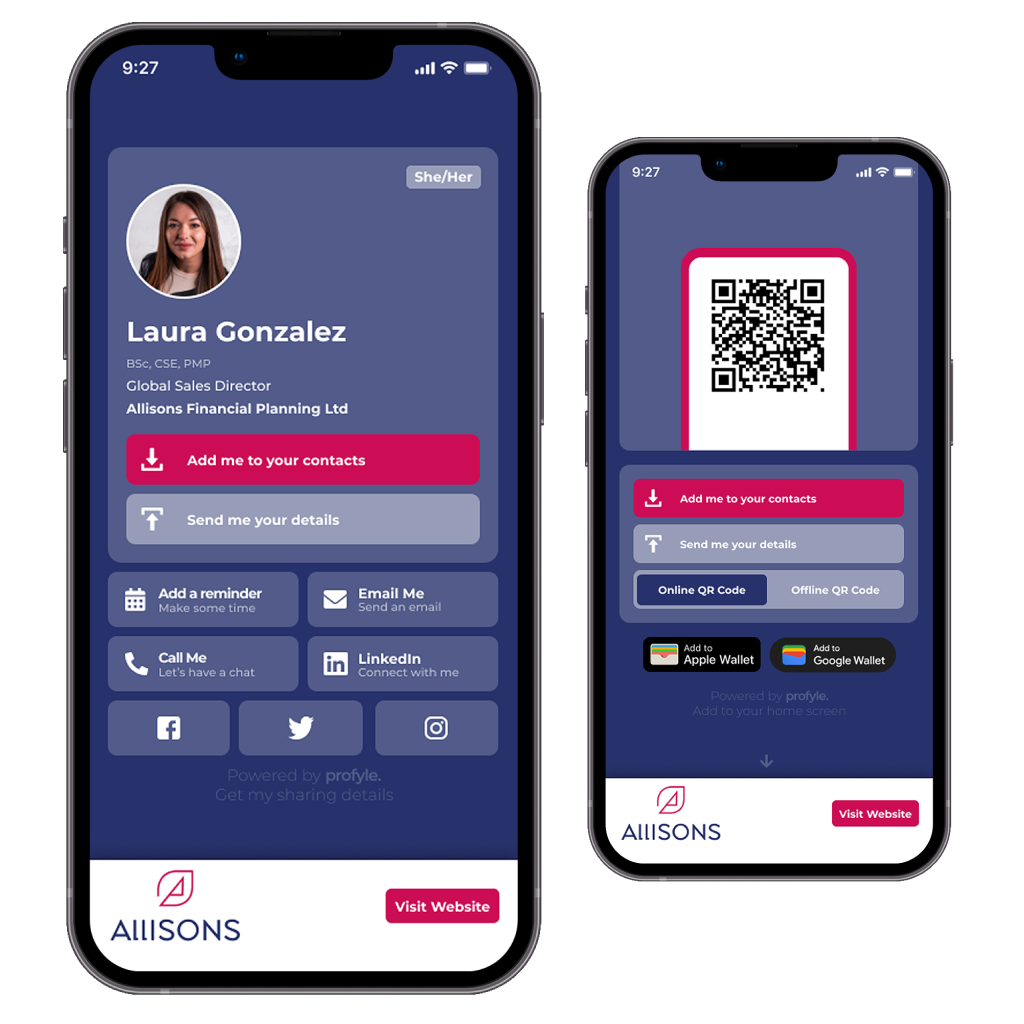
If your company is serious about sustainable marketing, your business cards should follow the same logic. Instead of printing and reprinting paper cards, many teams now use digital business cards as part of their sustainability strategy. You can talk to our team to see if this makes sense for your company.
These two terms are often confused. Many brands fail by staying only in green marketing. This is why greenwashing became widespread. A 2023 EU consumer watchdog review showed that:
Over half of green brand messages still mislead buyers
Most false claims come from packaging and ads, not products themselves
This proves that sustainability must be structural, not cosmetic. Before you telling your story, sustainable marketing requires (a) Clear claims (b) Verifiable facts (c) Public proof.
| Green Marketing Focus | Sustainable Marketing Focus |
|---|---|
| Eco-friendly products | Environment |
| Recycling | Social impact |
| Low-impact materials | Employee treatment |
| Climate claims | Data ethics |
| Long-term customer well-being | |
| Economic stability |
Traditional marketing often optimises for short-term attention. It prioritises clicks, impressions, and fast sales spikes. These metrics focus on how quickly attention can be converted into revenue, not on whether that revenue is stable, ethical, or durable.
From a sustainability perspective, this creates three problems. First, short-term campaigns often rely on high pressure, over-persuasion, or exaggerated claims. Second, they encourage overconsumption and fast replacement cycles. Third, they hide long-term costs such as rising acquisition spend, customer fatigue, and brand trust erosion.
Sustainable marketing shifts the focus from speed to durability, longevity, and resilience. The goal is not only to keep customers longer, but to reduce unnecessary churn, wasteful promotion cycles, and false urgency. A stable demand pattern allows companies to plan production, logistics, and staffing with less excess and less waste.
As a business, you focus on earning more money from providing more value. Increasing your customer lifetime value. But the sustainability difference is this:
Normal retention marketing asks: “How do we keep customers buying?”
Sustainable marketing asks: “How do we grow without forcing waste, pressure, or instability into the planet?”
Sustainable marketing depends on clear claims, verifiable facts, and public proof. This applies to environmental impact, pricing, data use, sourcing, and product performance. What matters is not only what you say, but what you can prove when asked.
Sustainable marketing avoids addictive interface tricks, fear-based pressure, dark UX patterns, and misleading urgency. These methods often increase short-term conversion but also increase regret, complaints, and churn after the purchase.
Instead, sustainable marketing supports informed choice, fair framing, and honest limits. It gives customers space to decide without pressure that distorts judgement. This makes buyers feel in control, not manipulated. Consumer psychology studies show that trust-based communication lowers post-purchase regret and reduces churn. Customers who feel respected are more likely to stay loyal, even if prices are slightly higher.
Environmental responsibility in sustainable marketing covers the full life cycle:
Raw materials
Manufacturing
Packaging
Delivery
Returns
Digital footprint
Most environmental impact does not come from marketing slogans. It comes from physical and digital processes behind the sale.
Digital marketing also creates emissions. A 2022 French carbon audit study found that one large email campaign can generate up to 13 tons of CO₂ when infrastructure, data transfer, and device usage are included. The same research shows that programmatic ad waste is a major hidden source of emissions, due to inefficient bidding, duplicate impressions, and unused data.
Social responsibility in sustainable marketing includes fair labour conditions, social care without tokenism, local supplier support, and ethical data use. These issues influence how people judge a brand long before they look at the product.
A Harvard Business Review analysis showed that brands with strong social trust scores grew brand likeability from 42% to up to 72% over time. The same analysis found that employee retention was higher in companies with strong fairness and social trust metrics.
This matters for marketing because high employee churn weakens service quality, brand consistency, and customer experience. Fair treatment inside the company shows up later in how customers are treated.
Local supplier support also reduces supply chain risk. Shorter supply chains lower exposure to geopolitical shocks, transport delays, and cost spikes. This creates more stable delivery for customers and more predictable messaging for marketing teams.
Paper waste, reprints, and outdated contact cards are a hidden but constant source of avoidable waste in most companies. Switching to digital business cards is one of the simplest sustainability upgrades a sales or leadership team can make. If you want to explore this for your organisation, you can book a short demo with Profyle Card here.

If you want to take sustainable marketing seriously, you need three things:
A basic theory foundation
A view of current research and data
Practical learning sources you can use in real work
Below is a structured way to build that.
University courses in sustainable marketing tend to follow a similar pattern. A review of several recent syllabi from business schools (e.g. ANU, National University of Singapore, Nova SBE, University of Oregon, Paris Dauphine) shows common elements:
Basics of sustainability and ESG
How sustainability affects the classic 4Ps
Consumer responses to green and sustainable marketing
Strategy, planning, and implementation
Monitoring, evaluation, and control
You will often see modules like:
“Overview of sustainability and its impact on marketing”
“The marketing mix for sustainability”
“Consumers and sustainable behaviour”
“Sustainable marketing planning frameworks”
“Internal marketing and change”
These courses are useful if you want a structured, academic view. But they are less focused on:
Day-to-day campaign design
Current platform rules on green claims
Practical trade-offs between margin, price, and sustainability
So, academic courses give you a framework, but you still need practical supplementation.
Recent systematic reviews show some clear trends. A systematic literature review of sustainable marketing (430 articles from 2020–2024) found:
Research volume is increasing, especially after 2023
Main themes:
Consumer attitudes and willingness to pay
Green branding and communication
Sustainable product design and circular models
Digital and social media in sustainable marketing
Gaps:
Limited work on small and medium enterprises
Limited integration of operational data (real emissions, real waste) into marketing research
For you, this means:
There is strong evidence on how sustainability influences consumer perception and loyalty
There is weaker guidance on how to redesign full marketing systems in practice
You will need to combine research insights with your own experiments.
Many leaders ask: “Will customers really pay more for sustainable products?”
Recent high-quality studies show a clearer picture:
PwC’s global consumer survey found that consumers are willing to pay on average 9.7% more for sustainably produced or sourced goods, even under cost-of-living pressure.
A 2023 critical review of willingness to pay for green products reports that willingness to pay a premium depends on:
Trust in claims
Perceived quality
Social norms
Personal environmental values
A 2025 experimental study in Scientific Reports confirms that:
Social and environmental preferences
Beliefs about quality and production costs
And clarity of information strongly shape both purchase intention and real willingness to pay for sustainable options.
Newer work in 2025 also looks at how to pay the “ethical premium”:
One study in Journal of Business Ethics finds that some consumers prefer paying the ethical premium in quantity instead of money. For example, they accept smaller product sizes at the same price when they know it supports ethical production.
Yes, many consumers are ready to pay a bit more.
But they need:
Clear proof
Trust in the brand
Reasonable price gaps
Simple ways to understand what their extra spend or trade-off achieves
This evidence should shape both your pricing and your marketing messages. Sustainable marketing only works when daily tools match long-term responsibility. If you want your networking and contact sharing to be part of your corporate sustainability strategy, digital business cards are a practical next step. You can book a demo with our team here and see how it works in real business settings.