


People talk a lot about design, fonts and brand colours, but rarely about the real starting point: how people in the UK now expect to connect. Therefore, it is perhaps worthwhile to stop a while and ask a simple question, what to include in a business card in the UK so it still earns attention?
More workers under 40 now save contacts through phones first, and printed cards often end up scanned but not hand typed into the phone.
A recent UK poll shows only 23 percent of adults have ever given out a physical business card.
Digital business cards are growing fast with forecasts pointing to strong long term adoption.
Whether digital or on paper, UK business card guides still stress the same rule, a good card must carry clear contact details, simple design, and easy reading.
If you ask “what to include in a business card in the UK”, you must first think: should I even print one? Increasingly, having a digital business card, like Profyle, is all you need.
Before you decide what to include in a business card in the UK, ask yourself four simple things.
1. Who will I meet?
Are they tech-friendly, old-school or a mix of both?
2. How often do my details change?
If you update your phone, website or role several times a year, printing fresh cards every time drains your budget.
3. What action do I want from the person?
A call? A booking? A social follow? A card that drives action needs links, not only print.
4. How do I want to be remembered?
Do you want a card people keep in a wallet or an instant contact saved in their phone?
If you answer these clearly, working out what to include in a business card in the UK becomes easier because you match format to goal rather than habit to tradition.

In the UK business scene, your card needs to answer one question fast: “How do I contact you?”
It does not matter if you’ve got amazing branding if the recipient cannot read the phone number or find your email. When someone asks what to include in a business card in the UK, they often focus on design and extras, but the core details are the foundation. Studies of print design show that information overloaded cards get ignored. A clear layout gives a better first impression.
Put your name and role at the top, in bold and slightly bigger font. The moment they look at the card they see who you are and what you do.
Place the company name and logo prominently, but keep enough white space around it so it doesn’t crowd the contact details.
Below that, list your phone and email side by side or one below the other, with clear icons or labels.
At the bottom or on the reverse of paper business card, include the website URL. That way the main contact details stay front-and-centre.
Consider: most digital business cards, like Profyle Cards, make the phone and email tappable links. That means when someone asks what to include in a business card in the UK and goes digital, they get extra value by tapping instead of typing.
Offering multiple phone numbers or several email addresses may feel thorough, but it often confuses. Human-centred studies in marketing show that too many choices delay action. If someone must decide which contact path to take, they may delay or not act at all.
That is why when you decide what to include in a business card in the UK, picking one main phone and one main email helps the card drive action rather than sit on a shelf.
Adding a short line of text under your title can help. For example: “Free 15 min review call” or “Senior Chartered Accountant specialising in SMEs”. This gives a bit of promise of value and sets you apart.
When considering what to include in a business card in the UK, that little line is optional but smart. It uses one of the psychological triggers of commitment and focus—people read a small line and remember the promise. It turns your card into a first step rather than just a label.
Most people already expect to see your name, job title and main contact details. That part is standard.
The real difference comes from the added elements that turn a small card into a small nudge. When UK design researchers look at printed and digital business cards, they often find that action-led features make the greatest impact. So if you ask what to include in a business card in the UK, the smart extras help more than many people realise. They shape how quickly someone decides to contact you.
Studies of consumer behaviour show that if people can scan a QR code that opens a booking page or a service list, they make faster decisions. This is why the extras matter. They guide the person holding your card toward one clear action.
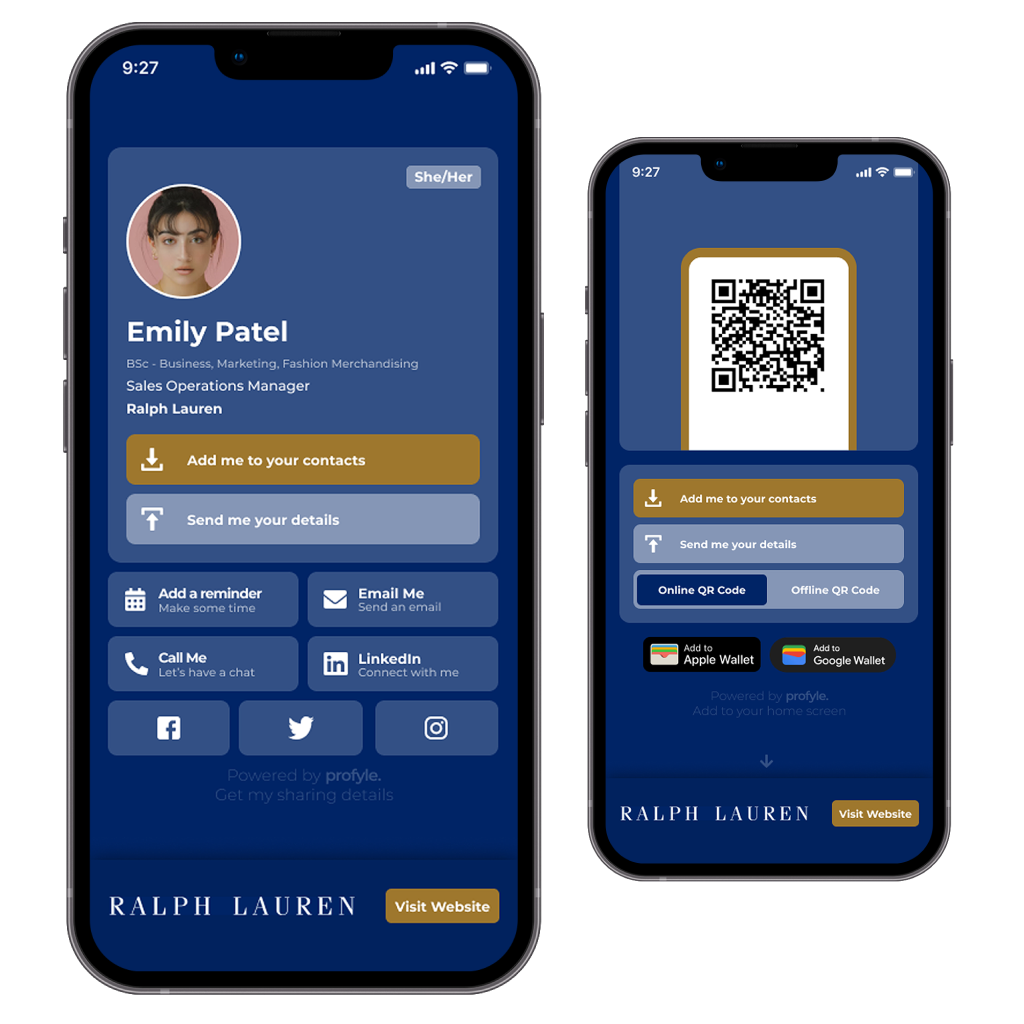
This is where Profyle begins to stand out.
Profyle’s digital business cards are built around this “action-first” design. Each Profyle card lets you add booking links, lead forms, profile pages, social links, video intros and smart QR codes that open the exact screen you want the contact to see. The platform is structured so you guide the recipient into an action within a few seconds, rather than hoping they search for your details later. Start a free trial and try it out yourself.
Here are the extras that often work best in UK networking settings. Each one adds clarity without clutter.
A QR code that leads to a general homepage can be confusing. A QR code that leads to one clear action is stronger. For example:
A booking link for a call
A link to your service menu
A link to a short intro video
Profyle generates a smart QR code for every digital card. It updates itself whenever you change your details. You can point that QR code to:
Your main digital profile
A booking page
A custom call-to-action section
A video or portfolio
A form that captures leads
This means every scan takes the recipient to the exact next step you choose. No extra tools. No confusing landing pages.
Not every platform helps. LinkedIn is the most trusted for business use in the UK. If you work in creative fields, Instagram or TikTok may help. But adding too many icons creates noise. Pick one that supports your brand and leave space for the eye to rest.
Profyle lets you add your social links cleanly and makes them clickable in one tap. It supports LinkedIn, Instagram, TikTok, YouTube, Facebook, X, and more, but it displays them in a clean, minimal layout so your card never looks cluttered.
A short line like:
“Book a free intro call”
“View portfolio”
“See client reviews”
This turns curiosity into action. Research on microcopy shows that short prompts with specific verbs drive more engagement than long descriptions.
Profyle lets you add custom call-to-action buttons. You can label them with simple action words and link them directly to your booking page, PDF brochure, portfolio or review page. These CTA buttons sit right under your main details so the reader sees them at the exact moment they are most interested.
Some UK business cards now include one line such as “Over 200 client projects since 2019” or “Rated 4.9 by clients”. You do not need long stories. A single proof point can shape trust quickly. When choosing what to include in a business card in the UK, this small number can help more than a long paragraph ever could.
Profyle lets you embed video testimonials, client reviews, star ratings and short trust signals on your digital profile. These appear directly below your main contact details, which creates a sense of social proof and builds trust before a conversation has even started.
Extras only work if they are simple. Too many icons, too many colours or unclear QR codes turn a helpful card into a messy one. UK print specialists warn that clutter slows the eye and weakens recall. If your card makes someone squint, they will not scan the code. The safest rule is one QR code, one social link, one clear message. That keeps your card clean while guiding people to act.
Profyle forces a clean first view. The design is mobile-first, clear, and spaced so the eye lands on the most important detail. All secondary material sits behind neat buttons or sections. This protects clarity even when you add more content with time.
In the UK, the question of what to include in a business card in the UK isn’t only about design or layout. For certain business types you must include specific legal details so your card remains compliant.
If your business is a limited company you must include your full registered company name, your registration number, the country of registration and the address of your registered office.
If you are VAT-registered and regularly deal with payments in your business relationships, then many guides say you should also show your VAT number on relevant stationery, especially if the card doubles as an promotional material.
For sole traders using a business name that is not their own legal name, you must show your own name and business address on stationery.
That said, for standard business cards that are simply handed out in networking settings, the law is less strict. Some sources say you only must include your name, job title and contact details.
Including all details helps you build trust. If a contact sees you’ve clearly named your company, your number and your address, they’re more likely to feel you are open and professional.
Omitting legal details when you must include them can cause penalties. One UK guide states failures can lead to a fine of up to £1,000 plus daily charges.
But you also don’t want to overload your card. Knowing exactly which details you must show means you preserve space for the essentials on the front. That helps keep your card readable and effective. Still answering what to include in a business card in the UK but with balance.

Design research shows that white space, hierarchy of text and clean contrast help people process information faster. One print-design study found that cards with white space around the key text had 33 % higher recall than those with dense blocks of text. This means good layout is part of what to include in a business card in the UK.
If your card slips smoothly into someone’s wallet or card holder, it remains accessible. In the UK the standard business card size is 85 mm × 55 mm. Going much larger can make your card memorable but also harder to carry. Going much smaller can force you to cram text and sacrifice clarity.
So when you decide what to include in a business card in the UK, start with this size as your base. Then use the space wisely: name and title first, company and logo next, contact details grouped, website and extras can sit under or on the reverse.
Here are practical layout rules to help your paper business card be readable at a glance:
Name and job title at the top or centre. Use a larger font size so someone reading across a table sees your name first.
Company name and logo next. Keep the logo simple, and give it breathing space so it does not interfere with text.
Contact details grouped together: phone, email and website. Ideally use icons for phone and email to speed recognition.
Use white space around these main blocks. Too much text or multiple smaller fonts force people to slow down.
On printed cards: avoid placing essential text too close to the edges because trimming errors happen.
On digital cards: ensure the first screen shows these core details without scrolling. The question of what to include in a business card in the UK applies equally whether printed or digital.
Colour and typography matter more than many people realise. In crowded UK meeting rooms or cafés the lighting may be dim. If you use low contrast text (for example light grey on pale background) your card loses impact.
Here are some simple rules:
Use dark text on a light background for key details.
Choose sans-serif fonts for readability at small sizes.
Avoid font sizes below 8 pt on printed cards. That makes the card harder to read quickly.
If you use a coloured background for brand identity, make sure key text still stands out clearly.
For digital cards, test your profile on a mobile phone in bright and dim light.
When you think about what to include in a business card in the UK, always ask: will someone read this easily in the place where I hand it over? It could be darker than usual, or more noisier.
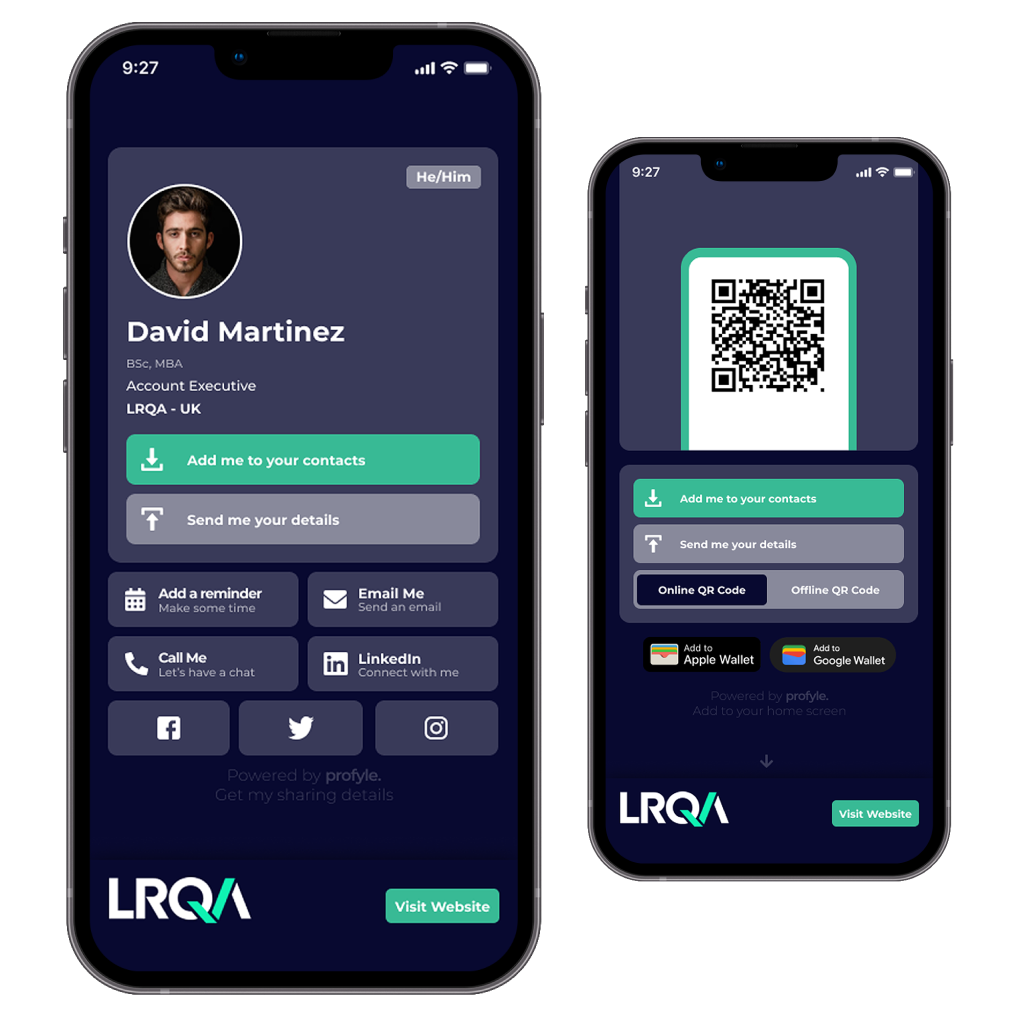
Digital business cards shine where speed matters and because that encompasses most of our lives, they are quickly becoming the de-facto #1 choice. With paper business cards being a good backup for certain occasions.
You meet a lot of people at once, such as conferences, expos, pitch events or university career fairs.
You change roles or details often. A digital business card updates instantly, and everyone you shared it with gets the fresh version.
You want people to take action rather than only save your name. People can tap to book a call, fill in a form, view a project or follow your socials.
You work in tech, marketing, design, consulting or any field where you want to show modern habits and easy access.
You need to include more information than a small rectangle can hold. Digital cards let you add videos, PDFs, reviews and links without turning into a cluttered mess.
They remove the “I’ll type it in later” delay. That alone can shift the outcome of a meeting. And when you think about what to include in a business card in the UK for digital format, the answer widens. You can add detail without losing clarity because you control both the front view and the deeper layers behind it.
You pick up a card, squint at the tiny font, then toss it into the pile. Meanwhile the next card you see has large name, clear number and white space around everything. That moment of relief makes a difference.